
Lost America · Medical history
Did people have allergies in 1900?
Yes—but the honest story is more interesting than a simple yes or no. The symptoms existed before medicine had consistent names, tests, records or access to care.
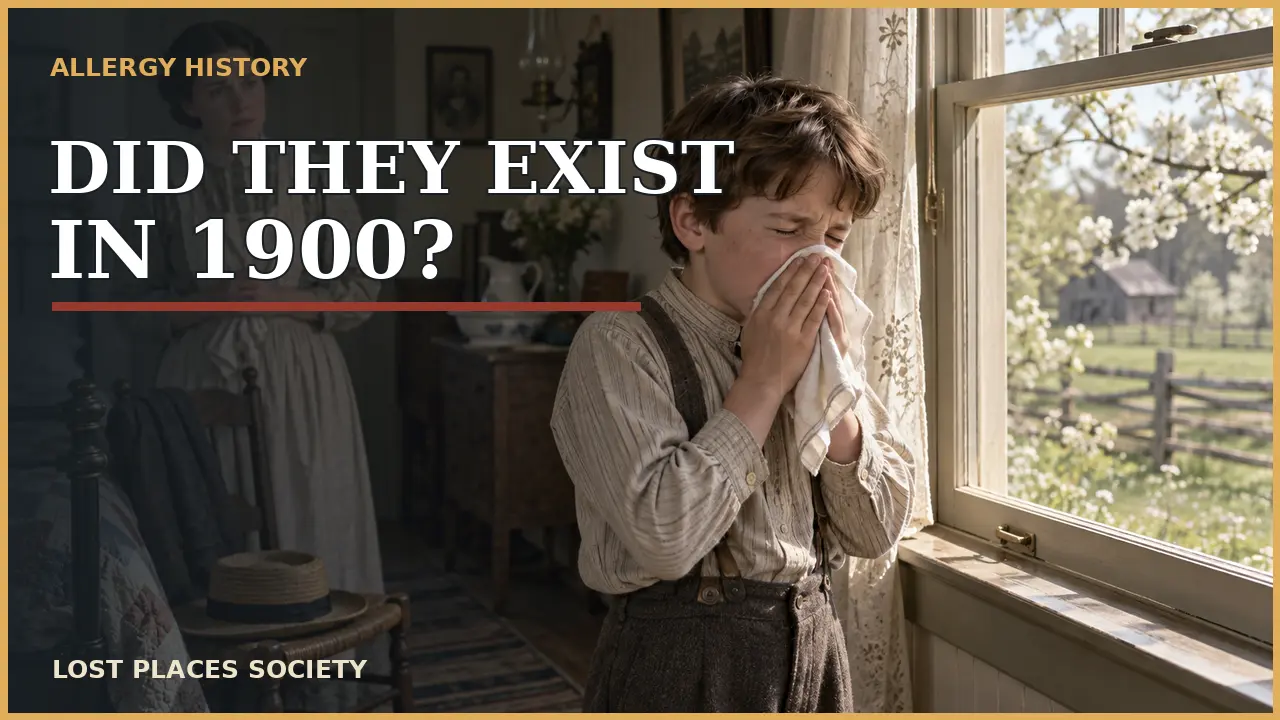
The short answer
They existed. Measuring them is harder.
Historical records document hay fever, wheezing, rashes, severe reactions and food-triggered illness. But a missing diagnosis in an old chart is not proof that a condition was absent. Names changed, tests were limited, many people never reached a doctor, and consistent population surveys came much later.
Watch the investigation
Follow the medical trail.
The film moves from the first careful hay-fever descriptions to the arrival of the words anaphylaxis and allergy, early food-reaction testing, modern survey data and today’s more careful prevention guidance.
What the historical record can prove
People did not need the modern word allergy in order to experience recurring spring sneezing, reactions after eating a particular food, itchy skin or dangerous systemic reactions. What physicians called those problems—and whether they recorded them at all—varied enormously.
- 1819London physician John Bostock published a detailed account of recurring seasonal symptoms later recognized as hay fever.
- 1870sCharles Blackley used experiments to connect pollen exposure with hay-fever symptoms.
- 1902The term anaphylaxis entered medicine after experiments revealed that a later exposure could trigger a severe reaction.
- 1906Clemens von Pirquet introduced the term allergy for altered biological reactivity.
- 1912Oscar Menderson Schloss used an early scratch test while investigating a child’s illness associated with egg.
Why the old numbers cannot answer everything
There is no trustworthy national statistic that lets us place “allergies in 1900” beside a modern survey and make a clean comparison. Earlier records favored people who could reach care, symptoms that physicians recognized and cases serious enough to document. Mild or familiar reactions might be described only in a diary—or never written down.
Better diagnosis explains some of allergy’s modern visibility. It does not automatically explain every increase researchers have observed.
The careful conclusion is therefore two-part: allergies are not new, and some allergic diseases may genuinely have become more common. Researchers study many interacting possibilities—including microbes, environment, diet, pollutants, infections and patterns of exposure—without reducing the change to one slogan.
What modern data show
In 2024, the U.S. National Center for Health Statistics reported diagnosed allergic conditions among children. These modern categories and survey methods cannot be projected backward onto 1900, but they show how visible and measurable the subject has become.
Prevention advice changed with evidence
Older advice often delayed allergenic foods. Later randomized research—not nostalgia—changed that conversation. The LEAP study and its follow-up found lasting protection from early peanut introduction in a specific group of high-risk children, which helped shape expert guidance.
That finding is not a do-it-yourself instruction for every family. A child’s risk, existing symptoms and medical history matter. Current prevention or treatment decisions belong with a qualified clinician.
Read the evidence
Sources used for this case file
- The Allergy Epidemics: 1870–2010 — historical review.
- History of food allergy and where we are today — peer-reviewed overview.
- National Library of Medicine: Hay Fever, the Nuisance of a New Season.
- 111 years of allergen immunotherapy — historical review.
- CDC/NCHS Data Brief 546 — diagnosed allergic conditions among children, 2024.
- NIH: early peanut introduction and lasting prevention evidence.
- NIAID addendum guidelines for peanut allergy prevention.