
Lost America · Food history
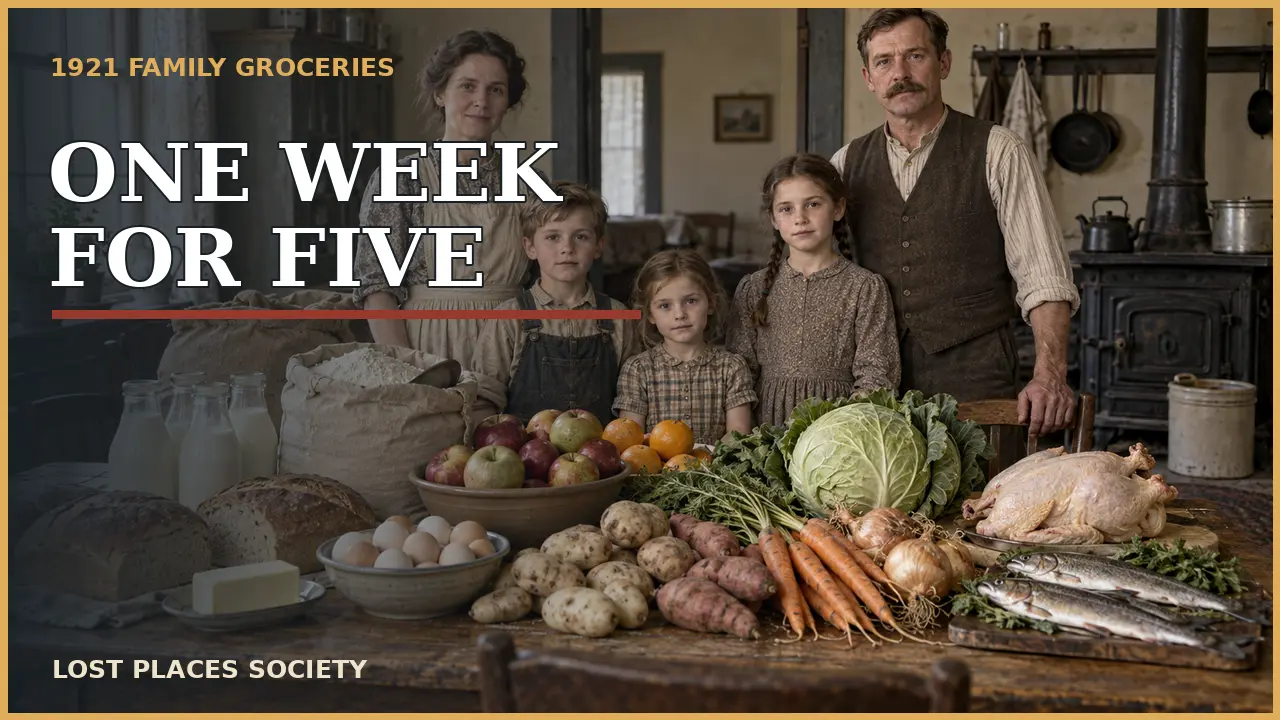
A 1921 grocery list for a family of five
Milk, potatoes, bread, eggs, meat, fish, flour, produce—and a surprisingly large allowance for sweets. One federal bulletin lets us rebuild the full week.
Read this first
A model—not one family’s receipt.
Caroline L. Hunt’s 1921 bulletin built a planning model for two working adults and three children. It was not a bill from a named household, not a claim that every family ate this way, and not proof that every family could afford or obtain the foods listed.
Watch the reconstruction
Turn the quantities into a week.
The film follows the original pages from the five food groups to the sample menu, the household account book and the labor hidden behind the plan.
Video schedule: Sunday, September 20, 2026 at 6:00 PM Eastern. This source file is available now.
The weekly supply on paper
The bulletin grouped food into five categories and estimated roughly 80,000 calories for the constructed household, with quantities intended to allow for some waste. That energy model is part of the document’s method—not a modern prescription.
Fruit and vegetables
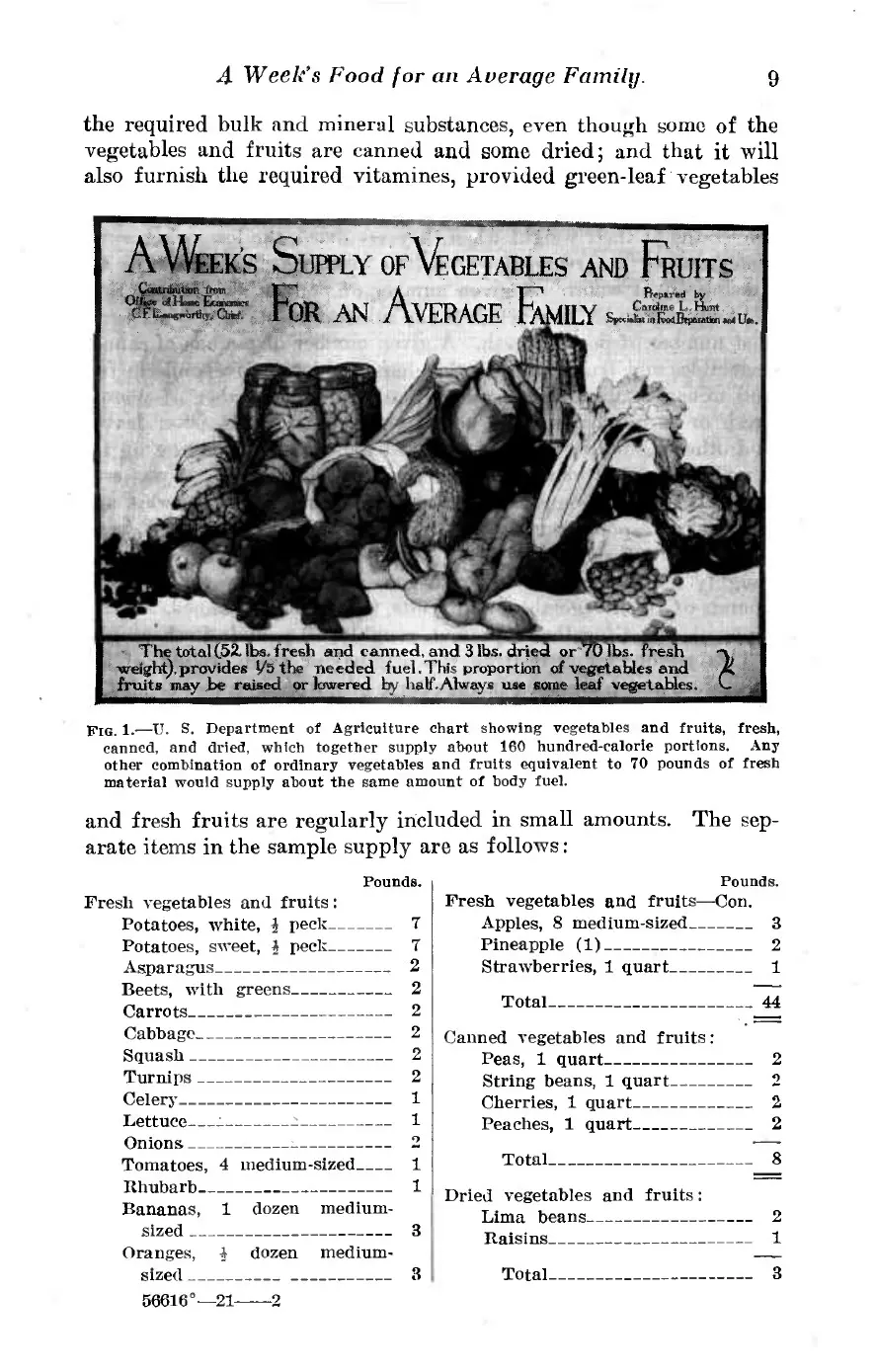
The model listed 44 pounds fresh, 8 pounds canned and 3 pounds dried, described as about 70 pounds in fresh-weight equivalent. The total sounds startling because it includes water-rich produce and covers five people for seven days.
Milk and protein foods
The weekly model included 14 quarts of milk, plus 10.5 pounds of “flesh foods,” cheese, eggs and peanuts. The bulletin called 21 quarts of milk a better allowance for this two-adult, three-child household.
Bread, cereals, sweets and fats
The cereal group totaled about 15 pounds in dry-cereal equivalent, including 10 pounds of bread and rolls. Sweets came to roughly 4.5 pounds of sugar equivalent, while the fats group equaled about 4 pounds of pure fat. The bulletin also said sweets could be adjusted or omitted—a detail that gets lost when a single number is pulled out of context.
The useful idea was the week
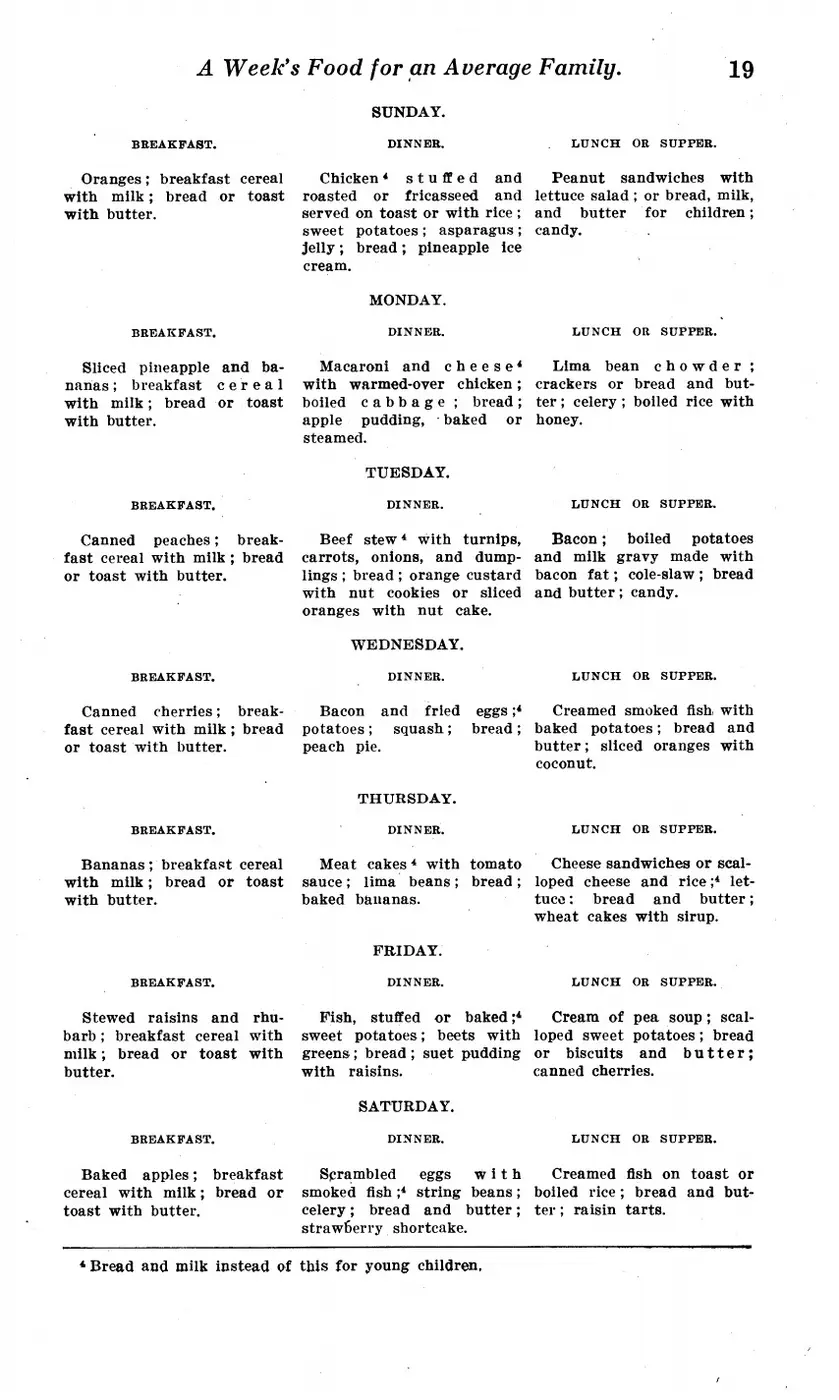
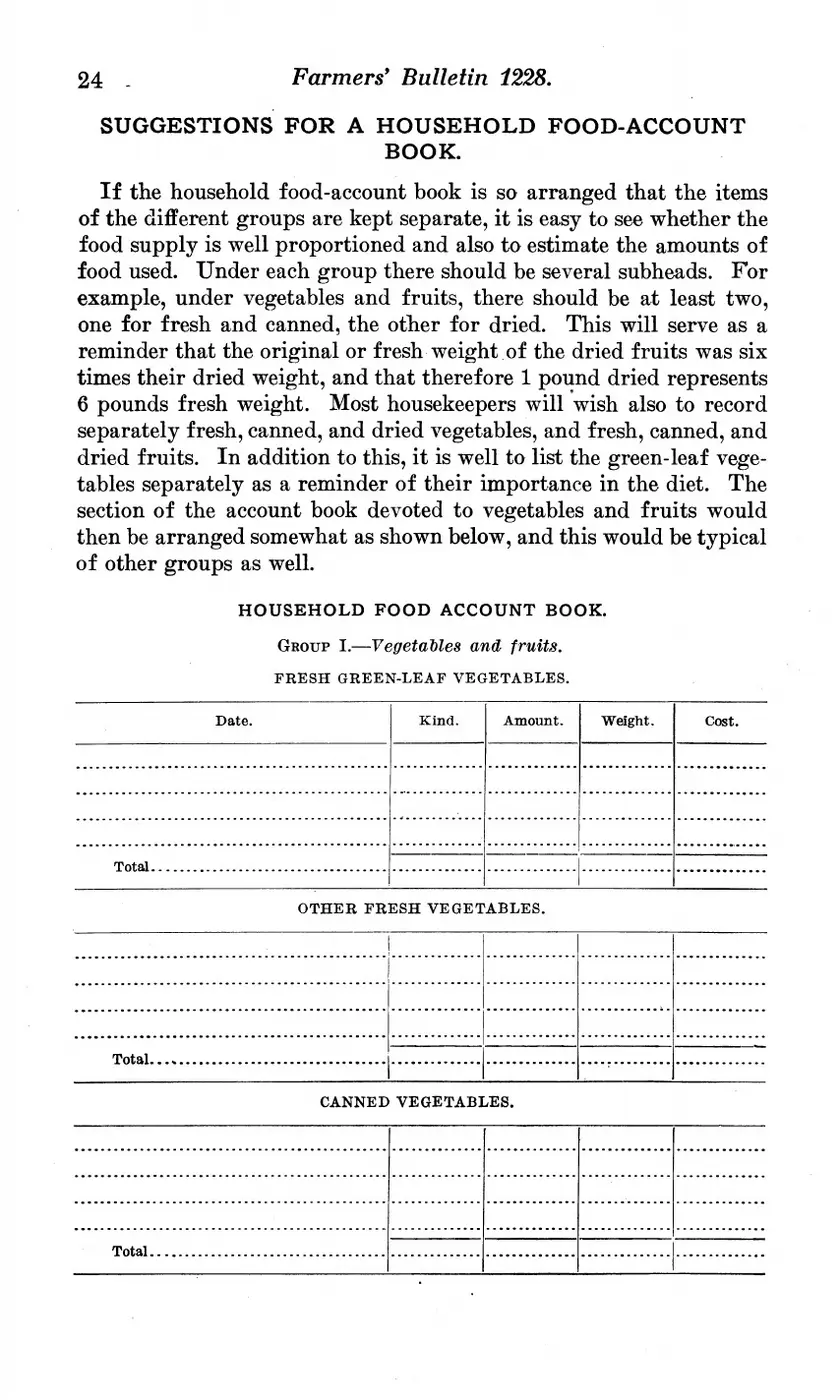
The bulletin did not ask readers to make one perfect plate. It showed a seven-day menu, suggested comparing costs and included an account-book template. Repeated breakfasts, planned leftovers and a whole-week view reduced guesswork—but also assumed time, fuel, equipment and household labor.
The enduring “hack” is not a miracle food. It is deciding what the whole week needs before the week spends the budget for you.
That planning principle can still be tested without pretending a century-old menu fits a modern family. Keep the lesson—plan the week, give leftovers a job, record what was actually used—and adapt the food to present-day needs, safety guidance, budget and medical advice.
What this list cannot tell us
A federal model is not a national dinner table. Income, region, race, migration, refrigeration, home gardening, season, food prices and access all changed what a household could buy or preserve. The document records an official planning ideal, not universal experience.
It also does not prove that people in 1921 were uniformly healthier. Historical foodways included strengths, shortages, risks and heavy labor. The honest comparison begins with a source and keeps its limits attached.
Read the evidence
Primary and context sources
- Caroline L. Hunt, A Week’s Food for an Average Family, USDA Farmers’ Bulletin 1228, December 1921. This archived scan is the primary source for every quantity on this page.
- USDA Economic Research Service, Dietary Recommendations and How They Have Changed Over Time — historical context for early federal food guides.